Sunday, 13 November 2016

Magic Marking


1. Invest in some sheets of stickers/labels - maybe treat yourself to some coloured ones so feedback stands out to students
2. Measure your borders on your sheet of labels and set custom borders on microsoft word to match
3. Measure the height of each sticker and create a table in word with the same heights
4. Take in student summary sheets and do a general review - what are the common strengths, targets and questions? Put these in a separate word document
5. Working split screen (minimise each word doc and drag the left or right and they will 'click' into half your screen) put student name followed by the appropriate strength, target and question
6. Pile up student work in the same order you are creating the labels
7. Print labels (and leave to dry for a few minutes to avoid smudges)
8. Stick labels on student work

Approx time for 30 students: 1 hour (with the added advantage they can read the feedback instead of asking what something says because of my handwriting...)

Summary sheets completed by students and reviewed for common STQ

Personalised STQ added to label template in word

Labels printed and added to student work

N.b. This requires you to have created a summary sheet for marking in the first place though - this way you can mark the reviewed content from several lessons at once. This could be done under exam conditions in class by students or for homework.

Sunday, 10 July 2016

ResearchEd 2016

When I logged into blogger today I realised it's been nearly a year since I last wrote anything - a year in which I have learnt an incredible amount, faced seemingly endless challenge and (hopefully!) settled at my amazing new school.

I went to ResearchEd 2016 at Huntington School yesterday and feel sufficiently inspired to throw together a few thoughts on it (I'm hoping to put something more coherent together about what an incredible event it was but it might need to wait until the Summer...)

What I really wanted to share was the shift in my thinking that happened as I listened to Baroness Estelle Morris give one of the keynote speeches. With her words of wisdom I think she may well have just become my new education idol. The key idea I took away was 'tell me what works' - how can we build a bridge between the teaching and research communities? She discussed how it has taken 25 years for the thinking behind what make a school great to shift from being focused on good leadership (obviously still important today) to good classroom practice and the notion that everyone can teach better, and abandoning the idea that good teachers are born and not made. I also liked the way she spoke about structural change not necessarily leading to higher classroom standards, but that better teaching certainly would. 

With the shift towards academies and multiacademy trusts I also found her views on how the system now works in the absence of local authorities interesting. She spoke of the LAs as a middle man, now removed, which therefore allows the other two players (the government and schools) to set the agenda. If we don't like the government agenda then we have to take charge as schools and lead the way with the changes that we hope will remove the barriers that young people face and strive for social justice. Regardless of how you feel about academisation and the like I think that this may have led to a genuine change in my view on how we should move forward in education. A pretty powerful way to start your Saturday morning really. (I certainly don't think she was advocating it - see her views on the white paper in the Guardian here: 
https://www.theguardian.com/education/2016/apr/26/education-white-paper-admission-failure-schools-local) 

More articles can be found here: https://www.theguardian.com/profile/estellemorris

Saturday, 18 July 2015

Every day is a new adventure...

Every day was definitely a new adventure as I joined my new school at the end of May this year. I'd just returned from an incredible 9 months of travelling and was lucky enough to be able to come in and get a head start before September. My husband and I decided to make the move to Yorkshire after 4 years of teaching in London and, despite growing up in Yorkshire, I've been amazed at just how friendly everyone is up here - cue North/South divide debate.

Starting at a new school is a fascinating process, my four years of teaching experience helped in some ways but finding new classrooms, working with a completely different type of cohort, learning the rules and various different procedures alongside teaching different exam boards at both GCSE and A level meant that I was hugely reliant on the kindness of my new colleagues when it came to understanding how the school worked. They definitely stepped up to the challenge, I hope that I managed to express my gratitude to each and every person who helped me out in my first half a term (from telling me how to work the photocopier to taking me to the elusive classroom at the top of a tower - I'm convinced my school is like Hogwarts, with shifting staircases thwarting your attempts to ever try and take the same route twice).

The first day of the summer holidays has given me chance to pause and reflect and think about how I want to develop my teaching from September onwards, so here goes...

Summer reading - our brilliant Director of Science has acquired a 'pedagogy library' for our department so that staff can borrow books to read. I've got 'Teaching Backwards' and '50 Quick Ways to Help Your Students Think, Learn and Use Their Brains Brilliantly' - I'm also planning on reading 'What's The Point of School?' cover to cover instead of just dipping in and out of it.


Skills- I want students to develop key skills such as talk/discussion, collaborative learning, effective self-assessment, revision/study skills, etc. I'm going to focus on one skill every couple of weeks throughout the year and make it explicit to students.

Bell work - this is the work that students do as soon as they get into the classroom. I'm aiming to have something up on the board that recaps learning from the previous lesson (or series of lessons) so that students revisit key ideas. Being in a new school with 13 different classes gave me perhaps a little insight into what it's like to be a student moving between several different rooms, teachers and subjects throughout the week and I can see why students sometimes forget what they've been learning!

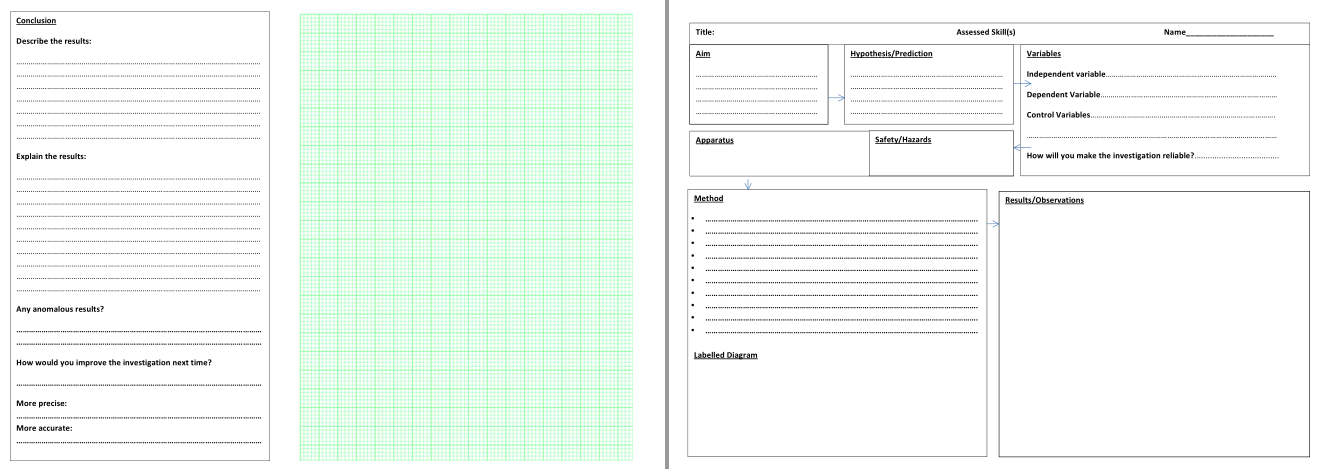
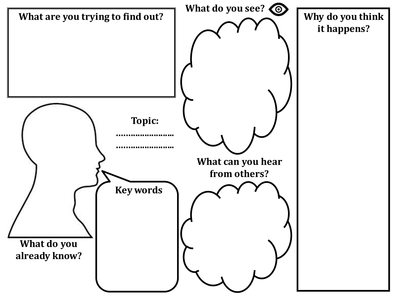
Practical work - I always worry about the effectiveness of practical work and how much learning or understanding actually takes place. Just handling practical equipment in Science is a significant challenge for many students, this year I want to make sure we're linking the theory and practice together to help students gain a deeper understanding of potentially abstract concepts in Chemistry. I've got a couple of writing frames that guide practical work but I'm also going to try and record a lot more practical work so that we can review our learning.


Conclusion builder.ppt

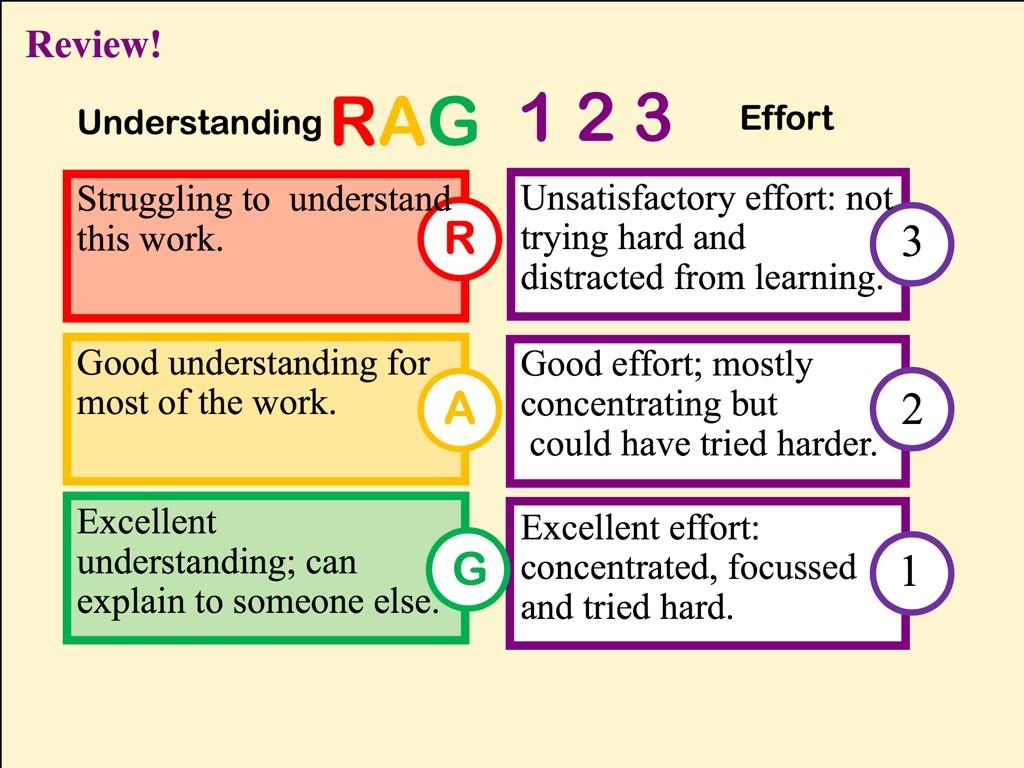
Marking and feedback - this is particularly important for my year 11 classes that I'll see for three hours over a two week period. We've set ourselves a bit of a challenge with switching exam boards for our students who are entering year 11 in September (with good reason, but that's another story...) and I think pre-planning my marking and feedback is going to be more significant than ever this year. Over the three lessons I'm going to aim for one self-assessed task, one peer-assessed task and one teacher-assessed task to ensure that students receive quality feedback. The self-assessed task is likely to be exam question based, the peer-assessed task will be using add, build, challenge to develop a piece of work and the teacher-assessed task will identify strengths, targets and a couple of questions to help students make progress. This is in addition to assessments that will be sat by all students throughout the year (where I'm going to get students thinking about why we are doing the assessment, predicting their scores and reviewing their strengths and targets as well as the actual answers...) RAG123 marking is something I'm going to try and use more of this year as well.


Homework - I want to stop setting homework because I feel I have to and start setting homework that allows students to consolidate their learning or discover something beyond the curriculum. I'm planning on using a couple of brilliant homework 'takeaway menus' that I retweeted recently to give students choice over how they do their homework. I'm hoping to print students a copy of the menu to put in their books and refer to throughout the year so we can be more creative with our independent learning.


iPads - my department is lucky enough to have a set of 15 iPads that we can order for our lessons. I want to get students using these to facilitate their learning and I want to use my own iPad more effectively in lessons, I'll expand more on this in a separate blog post though...

Sunday, 7 June 2015

The Power of Positive Praise

After four years teaching at a school in West London (and taking a year out to travel the world...) I started teaching at a new school in East Yorkshire last week. I met nine new classes and began to establish routines with all of them. As an NQT (after discussing the difficulties I was having with a particularly charming year 11 class) I remember my Head of Department telling me just to be positive with them. At the time I was so overwhelmed with everything else that I was trying to focus on that I didn't pay his words the attention they deserved. I'm not claiming to be an expert in behaviour management and the things I'm suggesting below might not work with every class but generally I've noticed that students respond positively to positive praise so perhaps it's worth making this even more explicit in our lessons.

Below are a few techniques that I've tried and found to be useful - now I just need to remember to keep doing them as much as possible, in as many lessons as possible!

During lessons

Say thank you as often as possible, as with as much sincerity as possible - even for the smallest acts of learning or good behaviour. I lose count of how many times I say it now, and try and turn requests around to focus on the positives (for example, "thank you to everyone who already has their books out", which signals that other students should also be doing this).

Praise groups of students -" I can see everyone on this table/on this side/in this group is ready/is already working hard, thank you". Keep going until you've got every table or group working well (it's interesting to watch other groups that haven't started working register the praise that other tables are getting and then follow their lead!)

Praise effort - "I can see some great work happening in this pair, it looks like <name> is working really well today".

Read out parts of student work (perhaps anonymously!) - "I can see some amazing work here, people are using phrases like..."

Speak to individuals and circulate throughout the lesson as much as possible, praising individuals specifically for particular aspects of their work or achievements they have made.

Take the time to acknowledge the positives at the end of the lesson (or week or half term) - I've asked a class to discuss what they thought they had achieved then added my own as well. I think that this is particularly important if a challenging class have made improvements in their behaviour and learning.

Send positive emails to tutors - as a form tutor I always loved receiving emails about the achievements of my form group, and it's always nice to have good news in your inbox rather than the usual emails making requests or complaints... Form tutors have regular, often daily, contact with students and can have a real influence on their behaviour. If you make initial contact with a form tutor to report concerns and seek support for a student then I would always try and follow this up later with a positive email if the student has improved. A similar approach could be taken with contacting parents.

Conversations with students about behaviour

When challenging behaviour always bring it back to the negative impact on learning so that students recognise the importance of appropriate behaviour for learning

Be consistent - if you would challenge one student for talking, then challenge every student in the class. You may find that your expectations differ slightly between classes (particularly if students are setted - as a slight aside I would suggest that setting works at the top end but that perhaps mixed ability would work better for other classes, unfortunately I haven't had the opportunity to trial this thought yet so it remains only as a feeling rather than anything proven!)

Follow the school sanction system. At my previous school we used C1-4 and my new school uses S1-4, either works really well - S1 and S2 are warnings, S3 is a third warning and a 15 minute detention with the class teacher and S4 leads to the student being displaced to another class and an hour department or whole school detention (it's a good idea to have a timetable for this so that teachers know where to send students, generally to more experienced staff members and sixth form classes if possible) When writing S1-4 on the board I use a code to indicate what each warning was awarded for (e.g. T for talking, W for not working, I for not following instructions, etc) so that the warnings can be discussed with the student at the end of the lesson.

Perfect your version of "The Look"... And use eye contact as much as possible - when addressing the whole class, making eye contact with a student and giving a slight shake of the head to indicate they should not continue that behaviour can sometimes prevent a behaviour from escalating.

When challenging behaviour in lessons sometimes it can be useful to try and speak quietly away from other students (maybe even subtly asking a student to step outside for a moment with you if appropriate). A technique I've used with students that react badly to being challenged publicly is to discuss with them how you will put a dot on their page if their behaviour isn't helping them to learn. This can be extended to writing an S1 (or whatever your school behaviour policy uses as a warning system) on their page rather than putting it up on the board if you think this is a worthwhile strategy to accommodate a student.

At the end of the lesson if I felt that a student didn't behave appropriately I would keep them for a moment and ask: Were you the best version of yourself today? If not, why not? (this may lead students to discuss specific behaviours, if so then question further - what were the reasons behind them choosing to talk after the countdown, etc as this can often uncover hidden issues - I've also seen it suggested that you could get students to write you a note starting "I wish my teacher knew..." to help you get to know a class context better) Finally I would discuss: What do we need to do to move on next lesson? And always try and finish with explaining "I believe you can be even better".

With extra tricky classes...
I wouldn't recommend going to this extent with all of your classes due to time constraints but I've definitely found them to be helpful when applied selectively!

Using stamps or stickers (even with older students...) You can give students their own sheet of scrap paper and then award a stamp or sticker for any positive behaviours (asking questions, discussing the work, completing a task, etc). I used to use marker pen dots but these are more easily forged by students than a specific stamp... At the end of the lesson get students to add up how many stamps they got to identify a winner.

Similarly you can have a list of student names and award points throughout the lesson and keep a tally. At the end of the week or half term you could total the points and possibly award a small prize for the winner if you think this might help with motivation. I'm definitely not above a little bit of chocolate based bribery (usually Freddo sized) with certain classes if leads to a significant improvement in learning environment.

If you don't want to keep a tally at the end of the lesson you could give each student a red/amber/green rating for their behaviour and record this in a spreadsheet. Red could equal 1 point, amber 2 points and green 3 points with the points being added up over several lessons.

Print a class set of praise slips (just a couple of generic sentences) and explain that the best students will get one at the end to show their form tutor or parents. These can be stapled or stuck into planners.

Extra reading...

Bill Rodgers and his approach to behaviour management - there are plenty of youtube videos and this great blog by @headguruteacher sums it up really well: http://headguruteacher.com/2013/01/06/behaviour-management-a-bill-rogers-top-10/


It's also sometimes worth speaking to the pastoral team at your school as well - they regularly work with some of our most challenging students and may have techniques that you could try ('learn to love the ones you love to hate' is something that a fantastic year leader used to remind me at my previous school!)

Tuesday, 24 June 2014

Differentiation...

I've just come back from a great training session led by one of the teachers at my school on differentiation. I've been teaching for four years now and I would like to think that I try on a daily basis to provide for all of my students as best I can but it was great to have a refresher on such an important aspect of learning and teaching.

We began by discussing what good differentiation looks like (making it meaningful for every child, giving equal opportunities for progress for all students, having a 'growth mindset' and high expectations for the whole class, differentiating by support, outcome or task) and what some of the barriers might be (time, how far to differentiate - over what range, setting and whether our students are independent enough or confident enough to make choices and see these through). We then considered one of our own classes and what the needs of students in this class were and the strategies that we are already using with them.

I loved the next part of the training - watching examples of best practice in the form of video footage of some of the fantastic teachers at our own school. We had already been discussing strategies in our groups and now we were given chance to see some ideas in action. I've put some of the ideas I think I'd like to try (or continue using in some cases!) under the heading of the four key strategies that were suggested. It's always good to keep it simple to avoid teachers feeling overwhelmed by the demands of training and these strategies do that perfectly.

Key Strategy 1: Getting into the HINT and CHALLENGE mindset
  • Using concept maps but leaving some blank (challenge) and having a hint card with extra explanations for those that want it
  • Hint and challenge cards/questions/tasks
Key Strategy 2: Developing your students' vocabulary at every opportunity
  • 10 word challenge with a twist - have ten words numbered 1-10 and ten definitions lettered a-i. Students have to write down the matching key word and definition by pairing the correct number and letter. The differentiation is that five are starred and these are the ones you have to pair first (so that some students will complete more than others)
  • Text highlighting - highlight key words in green and difficult words in red
  • Popcorn reading - the teacher starts to read the text and then calls on individuals at random to read a sentence
Key Strategy 3: Finding TIME SAVING ways to differentiate by task
  • Using red, amber and green cards in students planners so they can show you how they are coping with the work. Red students can be paired with green for peer support or be put in a group briefly for extra teacher assistance
  • Sentence/quote/text annotation with students being given a different example based on their ability
  • Pathways - have two options on the board, pathway A with a task described for if you found the last task tricky and pathway B for if you felt confident doing the last task
Key Strategy 4: Personalised feedback
  • Technically this isn't really feedback but having an annotated seating plan is incredibly useful. As is having a 'shape' group (mixed ability) and a 'colour' group (grouped by ability) for each student to mix up the groupings depending on the task
  • As you mark work sort the books into three piles (red, amber and green) for how well students have understood - these groups could then inform the first task of the next lesson 

Our world cup concept map! There may or may not have been a theme to the training session...

Thursday, 24 April 2014

This week I've tried...

We had a great department meeting this week (how often do you hear that?!) where our Head of Department shared a brilliant revision idea before getting the rest of us to this of quick, easy, low preparation revision activities to use with our classes over the next few vital weeks before their exams. 

All ideas from the Greenford High School Science Department :)

Revision ideas

Pub quiz – with a spelling round, picture round, etc

Exam questions/parts of a topic on A3 – students have 3 minutes at each station

60 second lesson/summary – students then present/go around and learn from each other before going back and adding information to their own 60 second lesson

This is the answer, what is the question?

12 squares – key words and definitions, ideas and explanations, cut up the 12 squares and use as a pairs game or as a weakest link style question session (this one was from our HoD!)

6 mark exam questions – write out all the key words and then number them in the order that you would use them in your answer, could use connectives to turn into a full answer

Just a minute – students have to try and talk for a minute about a topic, if they pause another student can interrupt and take over. Could include a list of key words that must be used/could be ticked off as the student is speaking

Taboo/articulate – students are given a word(or words) that they aren’t allowed to use and they have to draw/act/describe so their team can guess the word

3 colour notes – one colour for what you remember, one colour for what you looked up in your notes but DO understand, another colour for what you DON’T understand/always struggle to remember

Make a bullet point list of notes and then cut up the bullet points, muddle up and then reorder

Exam questions in pairs with a different colour pen for each person in the pair

Using Jenga blocks in groups to assign different parts of the topic/different things to do

Each one teach one – students teaching each other. Can be done by creating an ‘expert’ group that then presents to the class, or by taking one expert from each group and putting them into a new group.

Find someone who – fold a piece of paper into 12 and write a question or part of the topic on each square. Students go around and write the answer/explanation and the name of the person that told you

Quiz quiz trade – students have a slip with a question and the answer on it, they go around and ask each other their questions before trading slips

Split a page into 4 and use it for four different parts of a topic with each section needing to have key words and equations, 3 bullet points and a written explanation (variation on a mind map)

Mandelas (variation on a mind map)

Cut and stick parts of the specification onto an A3 sheet and then annotate with questions where the spec points are the answers

Speed dating Arrange students in two lines and get pairs to question each other before moving one line along to create new pairs

On the VLE/internet: SAM learning, doddle, GCSEpod and http://www.my-gcsescience.com/

Saturday, 18 January 2014

This week I've tried...

It's been a busy couple of weeks at school and more than ever I've relied on high impact activities that require little planning or resources to help me get through them! See below for a few ideas, more can be found on my 'instant activities' powerpoint available on slideshare at: ow.ly/s9WZ2 and on TES to download (with comments on each activity) at: ow.ly/sazBc

TarsiaI absolutely love Tarsia - I think it was originally designed for use in maths but it works for any subject at all and it's FREE to download here: http://www.mmlsoft.com/index.php/products/tarsia If you don't have it on your computer then save the activities as pdf files to print in school.I print one puzzle between two (choose the 'output' tab at the bottom so the pieces are muddled up) and get students to cut them out before doing the puzzle. They then hand them in at the end of the lesson and I paperclip each puzzle together and put them in an envelope so they can be used as the starter in the next lesson and then for revision after that.They take a little bit of time to put in the questions and answers but it's a worthwhile investment, and maybe get together with colleagues to develop a bank of them for different topics. They're a great way of testing whether students have understood the key ideas (if they have they'll make the correct shape!) and if some groups finish sooner get them to write the top 5 facts from the puzzle, or start to design their own, as an extension task.


Video narrationSuper quick and easy but really gets students to think. Select a video and show it to students without any sound - tell them they will be providing the narration. I show the video twice, the first time just for students to watch and the second time for them to note down any key events in the video that might be considered in their narration. After this students are given time to write their scripts in pairs (I insist on them putting their name in the margin for what each student will say otherwise they tend to go off task...) whilst the video is played several times in the background.If it is a short video and a small class you can get each pair to do their narration (this worked fine with a 1 minute video and an A level Chemistry class with four pairs) or if it is a longer video or there are more students you can play ten seconds of the video with the first pair narrating before pausing it and randomly selecting another pair to continue the narration from where the last pair finished. Thanks to a former colleague for this brilliant idea!

Writing letters to another classMy students absolutely loved this idea and really got into the idea of writing to other students! As a plenary get students to sum up what they learnt during the lesson (referring back to the lesson objectives) but write it on a sheet of paper as a letter to students in another class. I put up the register from another class and give each student writing the letter a specific student to address it to before I pass the letter on to that student in their next lesson. This works well if you have two classes that you teach the same thing to, or you could pair up with a colleague so you can 'post' letters between classes, or even get students to write to a younger or older class and adjust their style of writing accordingly.

Monday, 30 December 2013

NPQML National College Leading Teaching - reflections on Learning centred leadership

Initial reflections

Successful leaders:
·         Using a variety of styles and strategies
·         Actively seeking out good practices but adapting them where necessary
·         Context matters
·         Optimistic, can-do individuals who are committed to making a difference for their pupils
·         Strongly person-centred,  putting a premium on professional relationships

Influencing:
·         Directly
·         Indirectly (largest and most common)
·         Reciprocally

Structure and systems are also important:
·         Planning processes
·         Target setting
·         Communication systems
·         Monitoring systems
·         Roles and responsibilities of leaders
·         Policies for learning, teaching, assessment and marking

Links to personalised learning - the five components of personalised learning being:
1.       AfL
2.       Teaching and learning strategies that engage and stretch
3.       Curriculum entitlement and choice
4.       Student centred approach to school organisation
5.       Strong partnership beyond the school

I am inclined to disagree with the description of coaching as a "short term, authoritative intervention to support improved performance or changing strategies and behaviours" and of mentoring as a "long-term developmental relationship that supports personal growth and learning". In my experience mentoring occurs when there is a need for support to be given to a colleague in order to improve their teaching through giving suggestions (for example with PGCE students or NQTs) whereas coaching, and questioning in a coaching style, can be used to further develop teachers who are more able to reflect on their own practice and determine their own options and action points for development.

Reflect on the extent to which each of the four components of learning-centered leadership (monitoring, modelling, dialogue and coaching) is a significant part of your personal repertoire of leadership behaviours. What does your 360-degree feedback tell you about this?
How comfortable are you with this approach to your work as a team leader?

Monitoring - strong link between very good monitoring and good or better teaching. Knowledge of teachers' strengths and development needs.
I need to improve my monitoring by doing more informal observations and holding more conversations with colleagues about teaching and learning. I also want to encourage colleagues to observe each other more in order to learn.

Modelling - the power of example, teachers watch their leaders closely for consistency and to test whether they do as they say. What leaders pay attention to is noticed.
I think I usually model well but remembering that "teachers watch their leaders closely" is quite a powerful incentive to ensure that I do this in all aspects of my role.

Dialogue - can often appear to be informal. What did you do and what happened because of it?
I want to have more dialogue with colleagues about teaching and learning and put more of a "premium on professional relationships".

Coaching - combines all three components
I want to have conversations in more of a coaching style with colleagues when discussing their teaching and learning. If colleagues are able to come to their own conclusions about what will improve their teaching and learning then they are more likely to follow through with suggested actions.

To what extent do your leaders and colleagues model this approach?
I feel there is a lot of good modelling within my school and this is combined with effective formal monitoring. It might be beneficial in terms of leadership to further develop our informal monitoring and dialogue. As a department we are exploring the power of coaching, this might have more influence if it were a whole school approach though.

Use part of a team meeting to explore this approach to leadership with your colleagues and prepare a response for discussion at your next face-to-face session.
I am planning on discussing this with my colleagues, in particular the informal monitoring and dialogue aspects.

ACTION POINTS:

See 'monitoring', 'modelling', 'dialogue' and 'coaching'.

NPQML National College Leading Teaching - reflections on theme 2: Leadership and Effective Teams

Successful teams:
Trust, open communication, common purpose and shared values, focus, commitment, collaboration, regular interaction, development of teaching and learning
Leaders should focus their influence, their learning and their relationships with teachers on the core business of teaching and learning

Effect sizes of the five dimensions (greatest to least):
1.       Promoting teaching learning and development (both promoting and participating formally and informally)
2.       Establishing goals and expectations (even in the face of multiple, conflicting demands) AND ensuring high quality teaching  (by planning, coordinating and evaluating teaching and the curriculum)
3.       Strategic resourcing (allocating material and staffing resources in a way that is aligned with pedagogical purposes)
4.       Orderly and supportive environment (clear and consistently enforced expectations and discipline codes)

ACTION POINTS:
1.       I think it is important to remember the 'promoting AND participating' aspect of development. I want to show that I am also in the process of developing in order to encourage my team to do the same.
2.       The point about 'multiple, conflicting demands' is interesting and reflects what teachers are faced with on a daily basis. It is still worth taking the time to focus on building a successful team despite all the other pressures.


NPQML National College Leading Teaching - reflections on account of practice 8: Behaviour Management

How do Tony Walsop and Sarah Lockyer ensure that members of their teams are consistent in their approach to behaviour management?
·         Be clear on whole school approach and what that means in the classroom. High expectations and performance management - each teacher is ultimately in control, don't allow standards to fall because it is the easier route. Instead take the time to plan for good behaviour
·         Discuss previous experiences and learn from this with colleagues
·         Model (don't just tell people what to do) - invite others to observe and sharing strategies that have worked, buddy up in pairs for team observation and coaching. All of this should build confidence in terms of behaviour management
·         Lesson observations, learning walks, analysis of on call system, marking scrutiny for quality assurance and consistency of the learning experience
·         Building relationships outside of the classroom - share strategies with students and parents
·         Feedback and evaluation from staff observations, student voice

What can you learn in terms of your leadership of your team in ensuring consistency? What impact will this have on your practice? How will you measure its effectiveness?
ACTION POINTS:
1.       Model and share strategies - invite people in to see my best practice and encourage others to go and see best practice that is happening elsewhere in the department
2.       Encourage staff to share strategies with parents (e.g. slips in planners, emails/phone calls home)

3.       Seek feedback from staff on whether changes have been beneficial, perhaps anonymously via surveymonkey

NPQML National College Leading Teaching - reflections on account of practice 7: What makes a good lesson?

After watching the video and comparing and contrasting the views of others with yours, what do you think are the ingredients of a good lesson?
From the video I would say that a good lesson consists of three key elements:
Preparation
Planning, well organised, subject knowledge, well informed teachers, resources, reliability (clarity, well evidenced, well thought through)
Learning
Students understanding of expectation of lesson, objectives, clarity of outcomes - what do we want to achieve? Pulled together at the end - what have we learnt? Learning is assessed and reviewed
Appropriately selected visible learning methods - making the learning process explicit with the teacher as an enabler
Engagement
Passionate teachers that interest pupils, if not then teacher can engage because of subject knowledge, engaging content that connects with the real world, challenge and element of surprise- blow your mind, take you somewhere else, use your senses, unpredictability to avoid a 'sanitised' learning environment.

I particularly liked the idea that a good lesson makes a difference, has an impact and is a social process where students take mutual responsibility for the learning of themselves and others.

Another element that I would perhaps add to this list is this pastoral aspect of teaching. Students, particular those from deprived backgrounds, often rely on their subject teachers for emotional support and, whilst it might be possible to recognise a positive learning environment during an observation, it is not always possible to recognise the extent to which a teacher might be supporting a student beyond the curriculum.

I think that I personally spend quite a lot of time of the first two elements and sometimes struggle to incorporate the third element - engagement. I think this is something that I need to seek the advice of other members of my department on and by modelling this encourage them to do the same for their weaker areas in teaching and learning.

How can you develop a shared understanding of what makes a good lesson across your team?
ACTION POINTS:
1.       Ask my team what they think a good lesson looks like and them compare to my answer above

2.       Get our team to work together and go into lessons to 'talent spot' and see what makes a good lesson

NPQML National College Leading Teaching - reflections on account of practice 6: Subject specialism

How do the staff in the maths department featured in this account of practice continue to develop their subject knowledge? How does the Head of Maths support them?

Passion for the subject- enthusiasm, interest, curiosity
Staff modelling discussion of the subject
Good post-16 uptake
Student questionnaire - subject knowledge important
Delegate and trust staff
Play strengths of staff
Avoid sounding panicked
Break things down and pass on to your team in a manageable form that they want to do
Decisions made and initiatives discussed as a team
Quality assurance but recognising a range of teaching styles
Same teacher for a class over the two years of GCSE or AS
Staff are encouraged to attend their colleagues’ lessons, not to judge but to learn. As Rebekah says, “It doesn’t matter how long we’ve been teaching, we’re always learning.”
Learning snapshots - 10-15min drop in agreed by participants and looking at student work and getting student views on written feedback
Organisation of looking after resources strategically delegated to department members
Two thirds of department meeting time focuses on teaching and learning with everyone expected to contribute
Association of teachers mathematics
Database of staff strengths and areas for development following observation
Maths society
Open door policy where students can ask any teacher
Student ambassadors
Peer mentoring with sixth form volunteers
7 features of outstanding teaching and learning document
Key word booklets
16 Q cards to select from and answer the question on
Easter revision booklet


In what ways do you support members of your team to continue to develop their subject knowledge, individually and as a team? What, for you as a leader, are the greatest challenges, and how do you overcome them?
Anything highlighted in bold above is something that we already do in our department in order to support members of the team in continuing to develop their subject knowledge.

ACTION POINTS:
In our department I think the greatest challenges are:
1.       Delegating to and trusting staff to complete tasks. If I make expectations clear and, as described in the account of practice, "break things down and pass on to your team in a manageable form that they want to do" and then follow up then hopefully we will create a culture of colleagues taking responsibility for the tasks given to them.
2.       Encouraging staff to observe each other to learn, not to judge. I will try to model this myself with other colleagues and set up informal learning observations for members of my team.

3.       Dedicating department time to teaching and learning. I will liaise with the Head of Science to ensure that structured time (with useful outcomes) is dedicated to teaching and learning in department meetings.

NPQML National College Leading Teaching - reflections on Opinion piece 2: Understanding and using data

What data do you need in order make sound judgements about your team’s performance?
Homework and assessment data, coursework data, data from interim reports (attainment, effort and indicative grades), KS2, KS3 and GCSE and AS data, GCSE targets and ALPs targets.

Where will you get the data you need in an appropriate format?
SIMs and interim report analysis from our data manager, department spreadsheets which are colour coded for comparison to ALPs target and GCSE target.

Do you know how to interpret it and apply it to your situation?
Interpretation in terms of percentages of each grade and key indicators such as A/A*, A*-C, A*-G for GCSE and A*-E for A level, interpretation in terms of value added.

How will you test it to ensure that it is valid and reliable?
Moderation of coursework, external marking of GCSE and AS examinations, work scrutiny for homework validity and reliability, moderation/discussion of marking of assessments with both colleagues and students. All data is recorded in departmental spreadsheets that can be easily updated and analysed.

How will you discuss it with your team?
Previously I have shared data electronically but I feel this has perhaps been lost in amongst all the other emails people receive on a daily basis. I am now going to attempt to have a personal conversation with each member of my department when interim data analysis comes in highlighting key areas for praise/concern and also hold more regular discussions about the data in our departmental spreadsheets and the students that require additional support.

What have you learned from the data and what actions do you need to take?
This will vary with each set of data - usually I find that there are certain individuals that need highlighting for extra support in lessons (simple strategies like making sure that they are required to answer a couple of questions each lesson or spending an extra few minutes with these individuals when circulating and facilitating activities in lessons). At GCSE any individuals who are at risk of not achieving can be selected for extra sessions to give them another attempt at improving their coursework score and at A level individuals who are not achieving are placed in a Chemistry study support group once a week for an hour after school where they focus on study skills. The data is often useful for highlighting early on which students we are concerned about through their indicative grade. I now need to make sure I have data conversations with colleagues rather than just expecting them to analyse the data themselves.

When and how will you review your findings? What are the implications?
When I receive the interim report data analysis I will take a day or two to analyse it before informally meeting with the relevant colleagues to discuss the key points and identify students that require additional support. It might be helpful to have a document to guide this (perhaps just an A5 sheet per class where we can make a note of which students are causing concern and what will be done). Hopefully this will raise teacher awareness of 'at risk' individuals and the subsequent conversation with students may be sufficient intervention to see an improvement. If not the teacher can also provide extra support in lessons to these individuals.

Having analysed the school-based data relevant to your subject, key stage or project, what are the implications for your team in relation to closing the gap?
2012 report
School deprivation factor of 0.37 (above the national average), and also above national average for FSM, ethnic minority groups, EAL, school action plus and statemented students
·         Chemistry GCSE - selective (triple) but above average for A/A* and A*-C, above school average
·         Core - below average A*-C, above average A/A*, below school average
·         Additional - average A*-C, above average A/A*, below school average
Areas to improve in science:
·         First language English
·         SEN without a statement
·         School action plus
·         Indian (but Bangladeshi above average)
·         A*-C

ACTION POINTS:

These findings should be shared with the department and particular areas focused on in lesson observations and work scrutiny. Students that are not achieving should be highlighted at the earliest possibly opportunity through data conversations with colleagues. High quality teaching across the board is obviously important in order to improve attainment but it might also be worth considering with colleagues, students and perhaps parents what barriers may be in place for the groups  that have been identified above. To evaluate the impact of leadership on closing the gap we should revisit the data.

Sunday, 29 December 2013

NPQML National College Leading Teaching - reflections on account of practice 5: Using data in a secondary school to close the gap in achievement

How does Katrina identify gaps in achievement within her Faculty? Do you carry out a similar process? If so, how successful is it, and how could it be improved?

Look at the process by which Katrina monitors student progress and works with her line manager and team to implement strategies for improvement. How does this compare with the process in your school? As a middle leader, what can you learn from it?

Katrina comments on how her department uses a series of common assessments and written work (including formative assessment through homework, class work, smaller tests, etc) and makes comparison with baseline data to see early on whether both groups of students and individual students are progressing in line with expectations. I would agree that this early recognition is extremely important when considering how to reduce the gaps in achievement. The sooner support can be put in place the sooner improvements will be seen. I would also agree that formal and informal observations are useful for identifying where a Head of Department needs to help and also where to expect more from colleagues.

I found Katrina's constant use of the word 'intervention' a little concerning as I have come to associate intervention with additional time being spent with students outside of lessons. It would have been useful if she had been given the opportunity to elaborate on what she practically means by the use of this educational buzzword. When she mentioned the fortnightly meeting with her line manager to discuss data which then led to interventions and 'progress check points' being put in place before she reported back in the following meeting I did feel that this was a case of it looking like something was being done but that the actual substance in terms of what should be done for teaching and learning was missing. As I said, this may simply have been because Katrina was not given the chance to elaborate.

ACTION POINTS:
1.       Continue to monitor progress through both formative and summative assessments and data but perhaps hold more regular discussions with my line manager about the data
2.       Reflect on what 'in lesson' interventions could be put in place in terms of teaching and learning